What is the roofing deck? What is the roof decking?
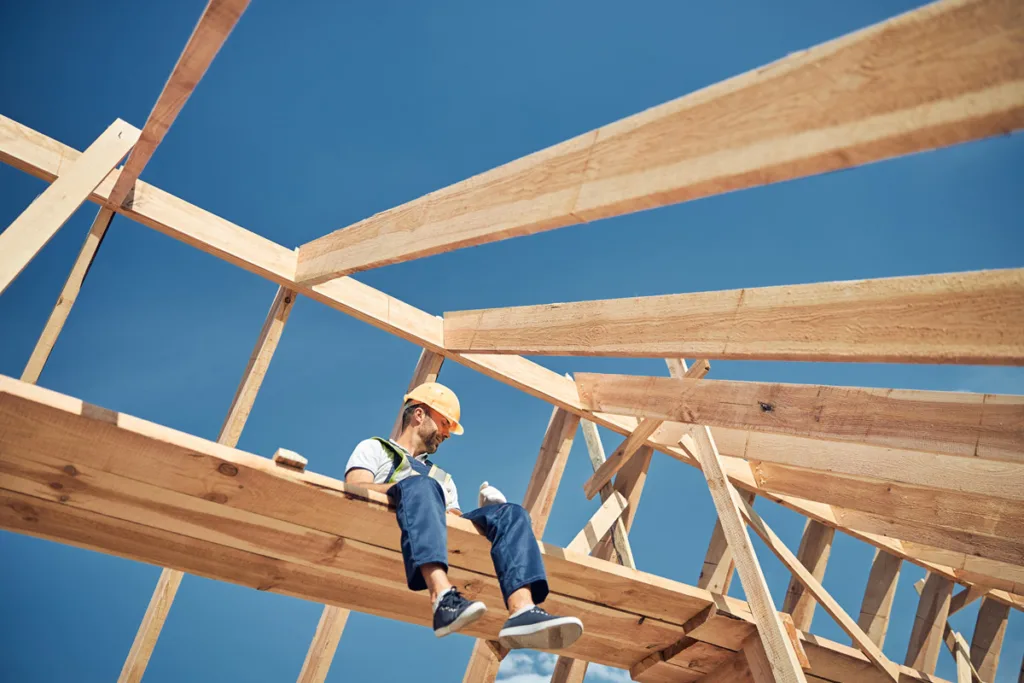
Roof decking consists of boards or sheets laid onto beams and rafters, forming the frame. It serves as the foundation on which other layers of the structure – underlayment, insulation materials, and roofing – are fixed. Roofing decking comes in two types: board and sheet. The sheet version is more commonly used in the U.S. However, let’s take a closer look at each type.

Board decking
This type of decking was considered standard until plywood was invented. The decking is made from long wooden boards or planks of rectangular shape. Their size is 1×6 or 1×8. Although the popularity of board decking is low today, it is still found in older buildings.
If board decking needs to be reused, for example, after roof repairs, its suitability is determined by specialists based on several factors, such as the condition of the elements, the integrity of their structure, and the presence or absence of mold or rot.
Sheet decking
Sheet material decking consists of flat sheets of wood – either OSB or plywood. Both options are good, so the choice is made based on the budget, client preferences, and the roofer’s recommendations.
Oriented Strand Board (OSB) is used more frequently. It consists of wood fibers that are pressed during manufacturing to form flat sheets. Their thickness is 7/16 inch.
Plywood is available on the building materials market in various thicknesses: ⅜”, ½”, ⅝”, ¾”. The size is selected depending on the rafter span of the roof. Plywood is not as popular as OSB, but it is widely used in residential homes.
Roofing materials
What material should be chosen for the roof decking? In addition to the two options discussed above, there is another – metal. Below are descriptions of all available materials with their main advantages and disadvantages:
- Plywood. This is the traditional option. Plywood elements consist of thin sheets of wood glued together. The material is durable, resistant to various weather conditions, and does not break down when exposed to heat or other external factors. Plywood is versatile, as it is suitable for decking various types of roofs: flat and sloped, classic and complex designs.
- OSB. Oriented Strand Board is a more modern option. It consists of wood chips that are bonded with glue, pressed, and formed into solid sheets. OSB is usually cheaper than plywood and can be used for any type of roof.
- Metal. Metal is used in the form of sheets and is strong, durable, fire-resistant, and resistant to mold. To prevent corrosion, stainless steel or other metals and alloys with corrosion-resistant coatings should be used. A metal decking will cost more than wood.
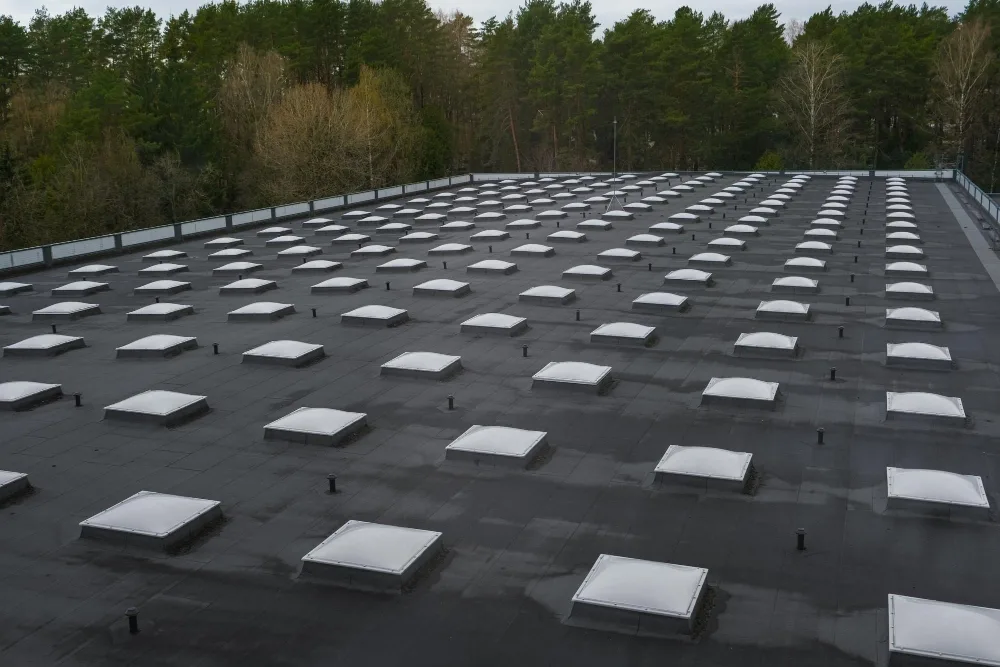
There are also gypsum and even concrete coverings used in specialized projects and in buildings with flat roofs. However, many roofers still prefer wood or metal. These materials can vary in width, length, thickness, and shape.
Does the roof decking need to be replaced when replacing the roof?
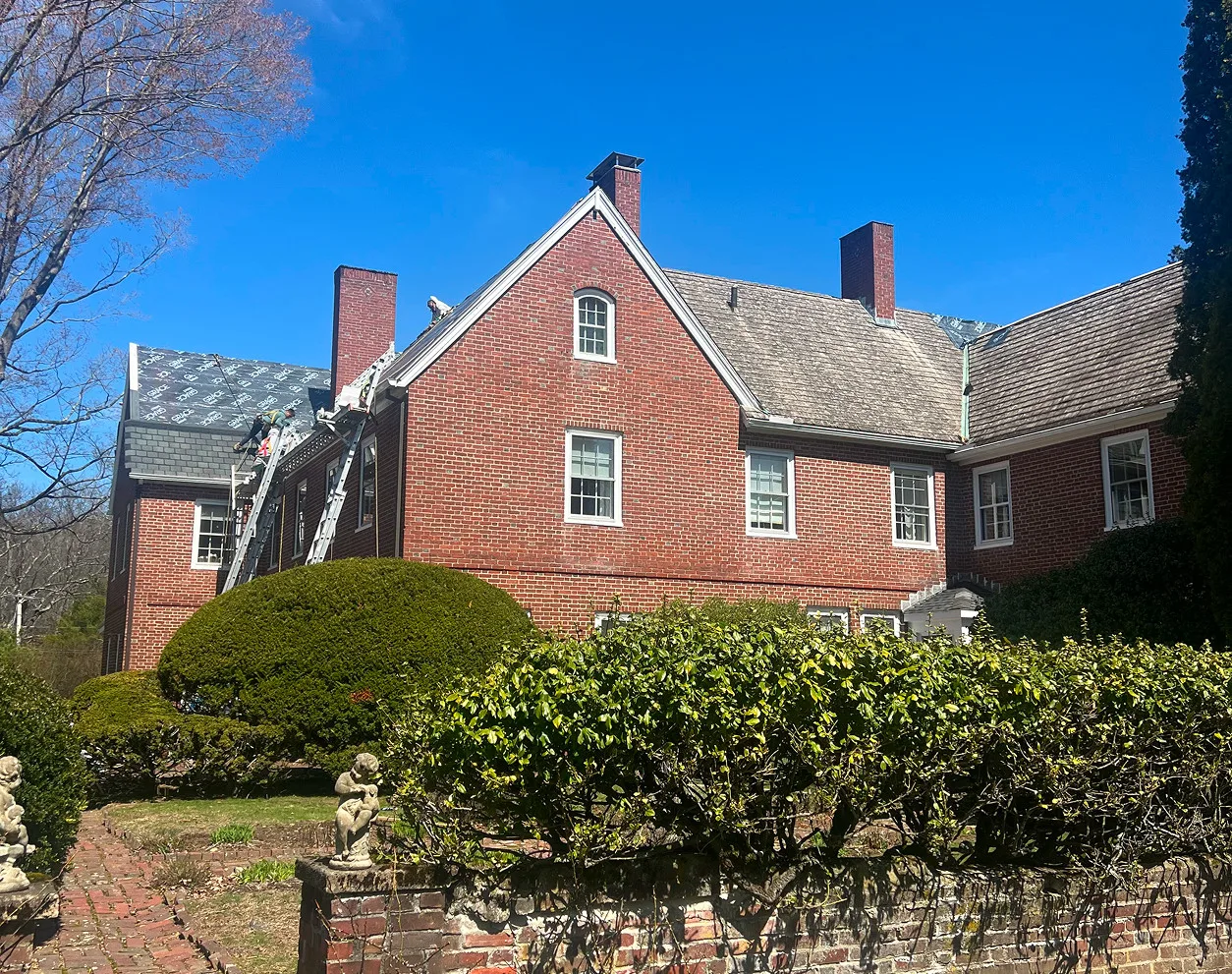
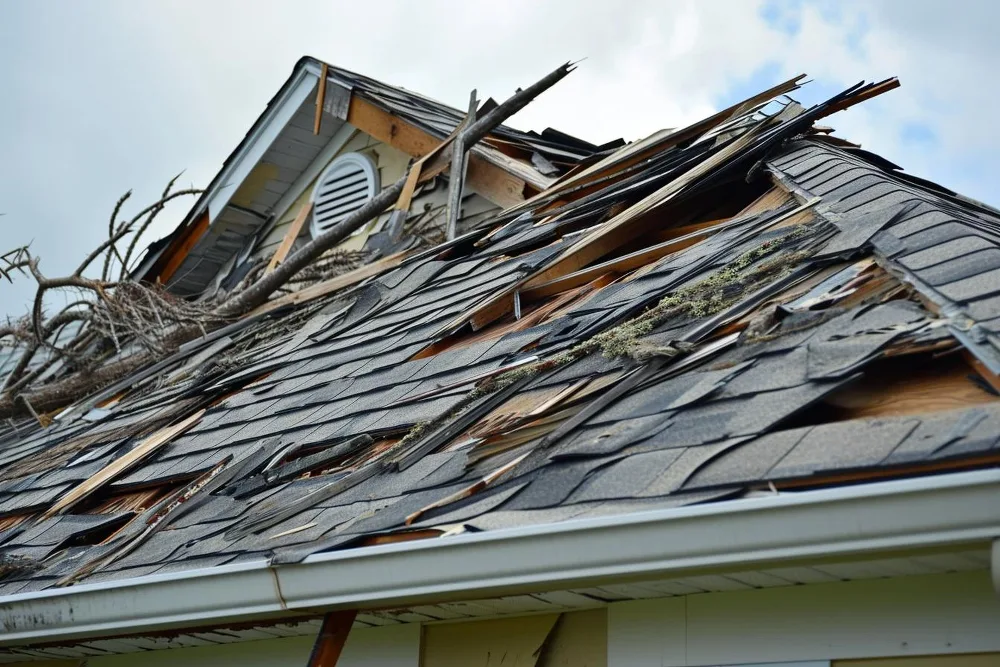
The need to replace the decking depends on its condition. If the integrity is compromised, there are significant damages, or signs of rot (mold, corrosion), the decking must be replaced before installing the new roof. If the condition is satisfactory or excellent, replacement is not necessary. The new roofing is installed on the existing decking.
In most cases, only a few sheets or boards need to be replaced. It is impossible to determine the exact amount of materials to be replaced until the old roofing is removed, so the purchase is made after removing the covering and analyzing the situation.
The rules for replacing the roof decking are regulated by the International Residential Code. The 2018 edition includes two codes. Let’s review each separately.
R905.1: Application of roofing materials
This code does not apply to the decking itself, but rather to the correct installation of the roofing. It is assigned the number IRC R905.1. The title of the code is “Application of roofing materials.” According to this regulation, roofing materials must be used in compliance with the provisions of the section, as well as with the manufacturer’s operating instructions.
For example, since 2021, tile manufacturers have added a clause to their instructions recommending the replacement of board decking where the gaps between individual boards are greater than 1/8 inch. If this is not done, nails driven in are highly likely to fall into the gaps and may later cause leaks.
R905.2.1: Roof sheathing requirements
This set of rules directly concerns the decking. The code numbered IRC R905.2.1 includes requirements stating that asphalt shingles must be laid only on a solid deck. This means the decking must be able to support the new roofing. To ensure this, any rotted or damaged elements of the decking must be replaced with new ones before installing the covering.
How much does roof decking cost?
It is difficult to determine the exact cost, as prices have fluctuated greatly in recent years. The range is large, and prices for wood vary significantly depending on the manufacturer, composition (wood species), and characteristics. In any case, the material is quite expensive.
The average cost for board decking installation is $3.50 per linear foot. For sheet decking, the price is on average $90 per sheet. The cost includes both materials and labor.
The price is influenced by the type of material, so to calculate the budget, it is better to consult with a roofer. They will determine the appropriate type and its required properties. Some contractors provide estimates before offering services. The exact cost of decking, if it requires repair or replacement, is listed as a separate line or as a full item in the contract between the homeowner or commercial property owner and the roofing company.
What to know before hirin
Roof decking installation is a complex task that requires a responsible, professional approach. It cannot be done on your own without the necessary knowledge, tools, and skills. Therefore, it is better to entrust this important process to specialists.
How to find and hire a reliable contractor? Compare several offers and pay attention to the following:
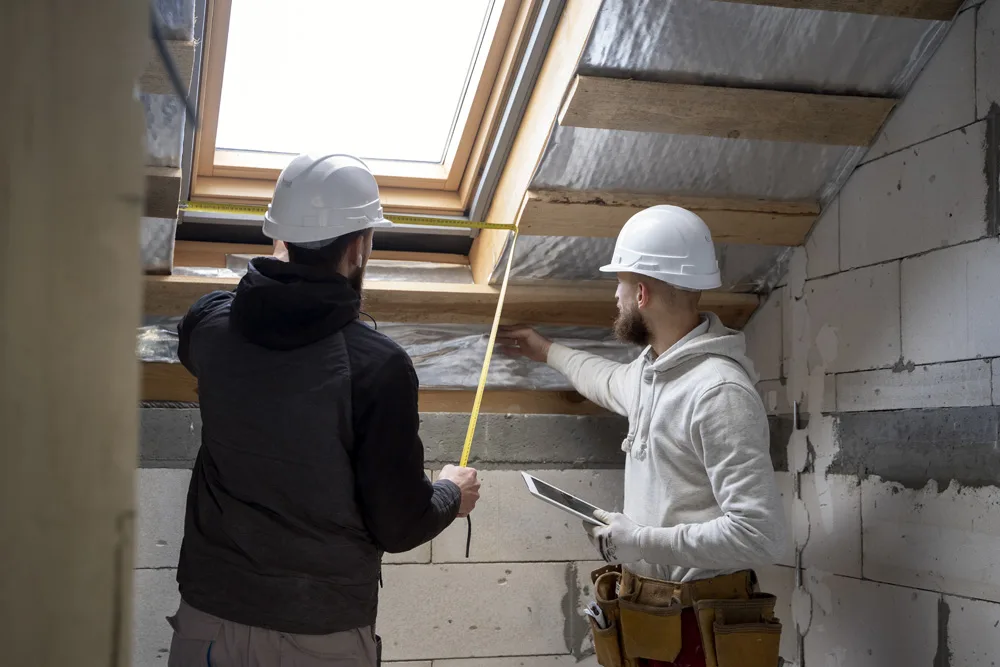
- Inspection. Roofing companies usually provide this service for free. The inspection involves examining the roof, especially the decking. For this, the roofing specialist may partially remove the covering to assess the condition of the decking.
- Work under contract. This document guarantees that the contractor will fulfill all obligations and protects the rights of the client.
- Honest estimate. The estimate includes prices for materials, labor, and auxiliary elements (fasteners, insulation).
- Compliance with current standards. The contractor must be familiar with and comply with these regulations.
- Adherence to safety standards. Workers on the roof must have fall protection to reduce the risks of falling. Specialists also use personal protective equipment such as helmets.
Tip! It will be useful to consult with representatives from your state’s building department before starting work.
Summary
Roof decking is the foundation on which the tiles, slate, metal sheets, or other materials are attached. Its quality directly affects the strength and lifespan of the roof. Therefore, replacing, repairing, or installing decking should be entrusted to professionals – Roofing & Siding in Cape Cod. We will conduct a free inspection, develop an optimal solution, help choose the best option within the budget and preferences, prepare an estimate, and complete the work efficiently and to high standards.